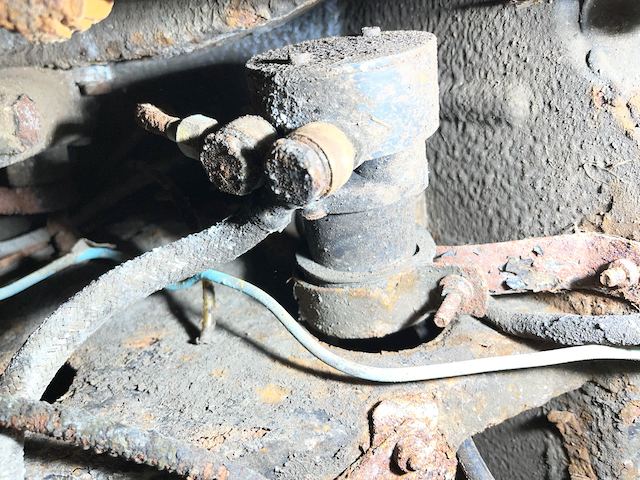
The back of the car often smells of fuel. In fact, the front of the car often smells like fuel but this fix probbably won't help with that...
New fuel tanks can come from a variety of places: - MGOC Spares do avery smart looking zinc-plated, powder-coated one. Sadly, it was out of stock when I was looking to buy. - MGB Hive do two, but why would anyone choose to buy the one without a drain plug? - Moss though this one seems more expensive and without any of the bells or whistles
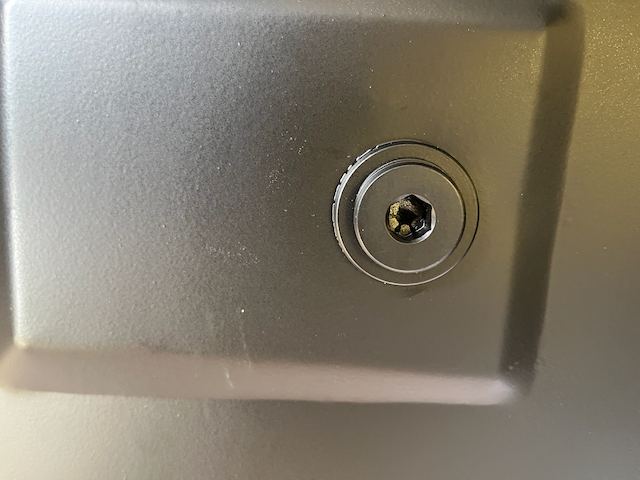
I bought the one from MGB Hive, who were able to deliver it - along with a new Hardi fuel pump, all the required fixings, some Hammerite, and some other various neccessities - very quickly. One minor concern I had when it arrived was that it looked like they had forgotten to inlcude that important new drain pug. It looks like there was something in the hole that would function as the drain hole, but, on closer inspection, there was no issue, The drain plug is a flush fit (which can be undone with an allen key).
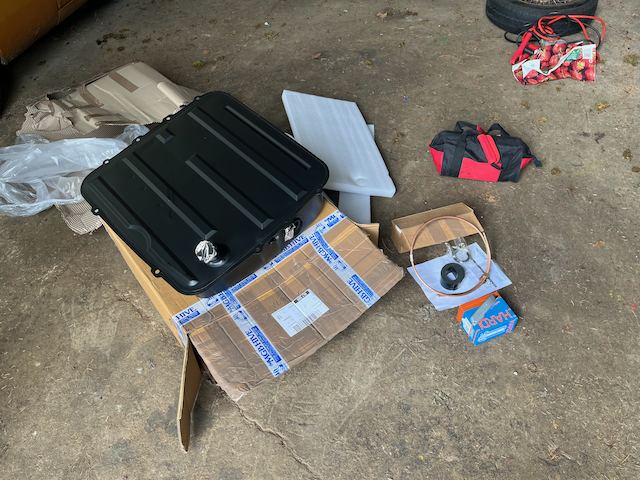
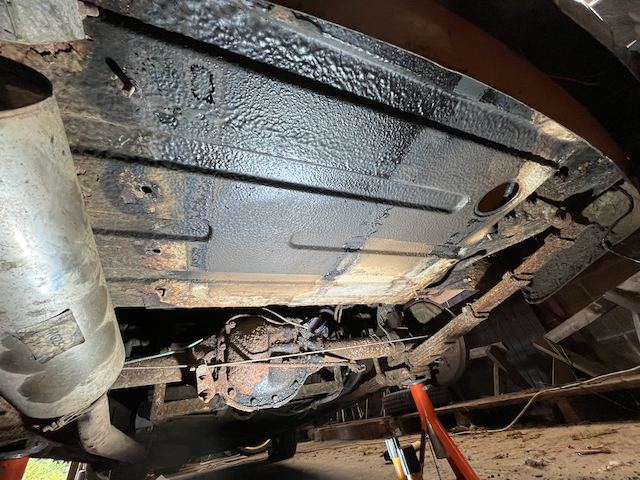
Now that I had the new tank, I could work out how to drop out the old one. THe Haynes manual showed nine bolts which needed to be unbolted. Actually, five of these were bolts with captive nuts and with four studs which protude from the bottom of the boot bottom.
Having raised the back of the car (and removed all of the stuff from the boot), I made my first mistake.
What I should have done was to unplug the fuel line just after the pump, and then use it to drain the tank into a handy container. That way, I could have easily have kept the fuel and have massively lightened the load I then had to wrestle with.
Having not done the prudent thing, I quickly unbolted the fuel line which was attached to the old tank and unplugged the two wires which were attached to the fuel sender. From the top of the tank (i.e. in the boot itself), two clamps held a rubber tube which connected the fuel filler neck on the back of the car to the protrusion on the top of the tank. Unscrewing those clamps allowed me to withdraw the filler neck out of the back of the car. All that remained attaching the fuel tank to the car were those nine bolts (or five bolts and four nuts).
Holding the bottom of the tank up with the floor jack, six of the various fasteners came undone easily. However, the two bolts at the rear of the car, were very misshapen: no socket head or spanner fitting properly. Luckily, some bolt-head remover sockets did the trick eventually. In removing eight of them, however, the final remaining bolt was holding the whole weight of the tank which was now hanging at a skewed angle. This meant that, when I reached for the impact gun having become bored with the slow pace of things, instead of undoing the bolt it actually just ripped the captive nut out from its holder. Luckily, 10 minutes of blindly grasping the nut with a pipe wrench with one hand while using a socket wrench with the other allowed me to get it free.
Then it was off! Down she came!
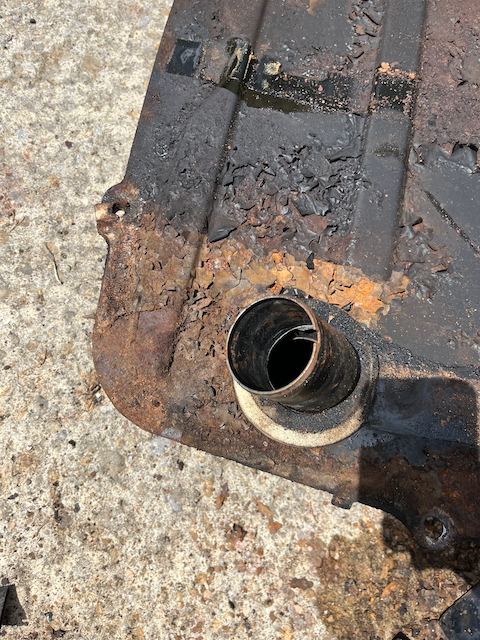
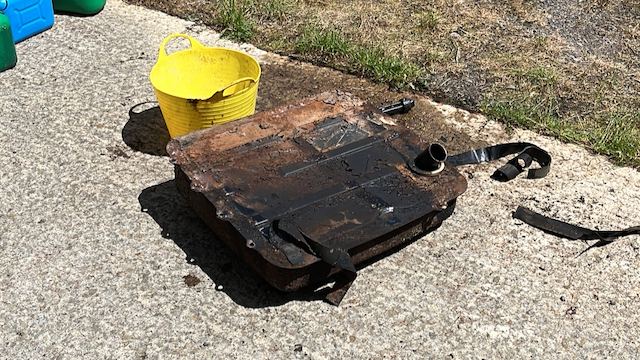
I lowered it down gently with the jack, and pulled the tank out of the back of the car. The top was covered in rust flakes, with at least one hole - that might explain the fuel smell!
I gently tipped out the 20L of fuel which remained inside, storing it safely and security and definitely not spilling any of it all over the floor...
Of course, the tank is only half of the story: the old pump needed to come out too. There's no particular reason I needed a new pump, but it seemed like the sensible thing to do to avoid some future failure. This was remarkably easy, compared to the tank. The pump is held in a clamp inside of a rubber mount, just unscrew the clamp and it's free. It's also wise to unscrew both the hard line coming from the fuel tank, and remove the hose which leads to the engine.