← back to Home

MGB

Upgraded Anti-Roll Bar

I had read that the anti-roll bar on the front suspension was responsible for managing body roll, and that an easy way to fix the - what some passengers called "horrendous" - body roll was a thicker, stiffer anti-roll bar.

It's an easy replacement to make. Probably, it's possible to do it without removing the wheels, but I did as it was easy to do and made my life much easier.

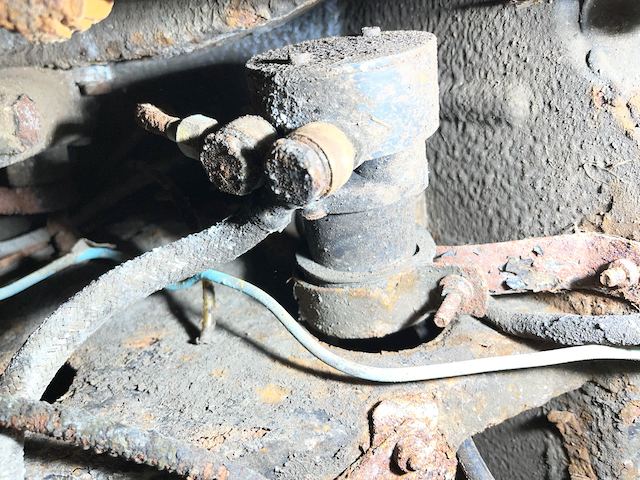
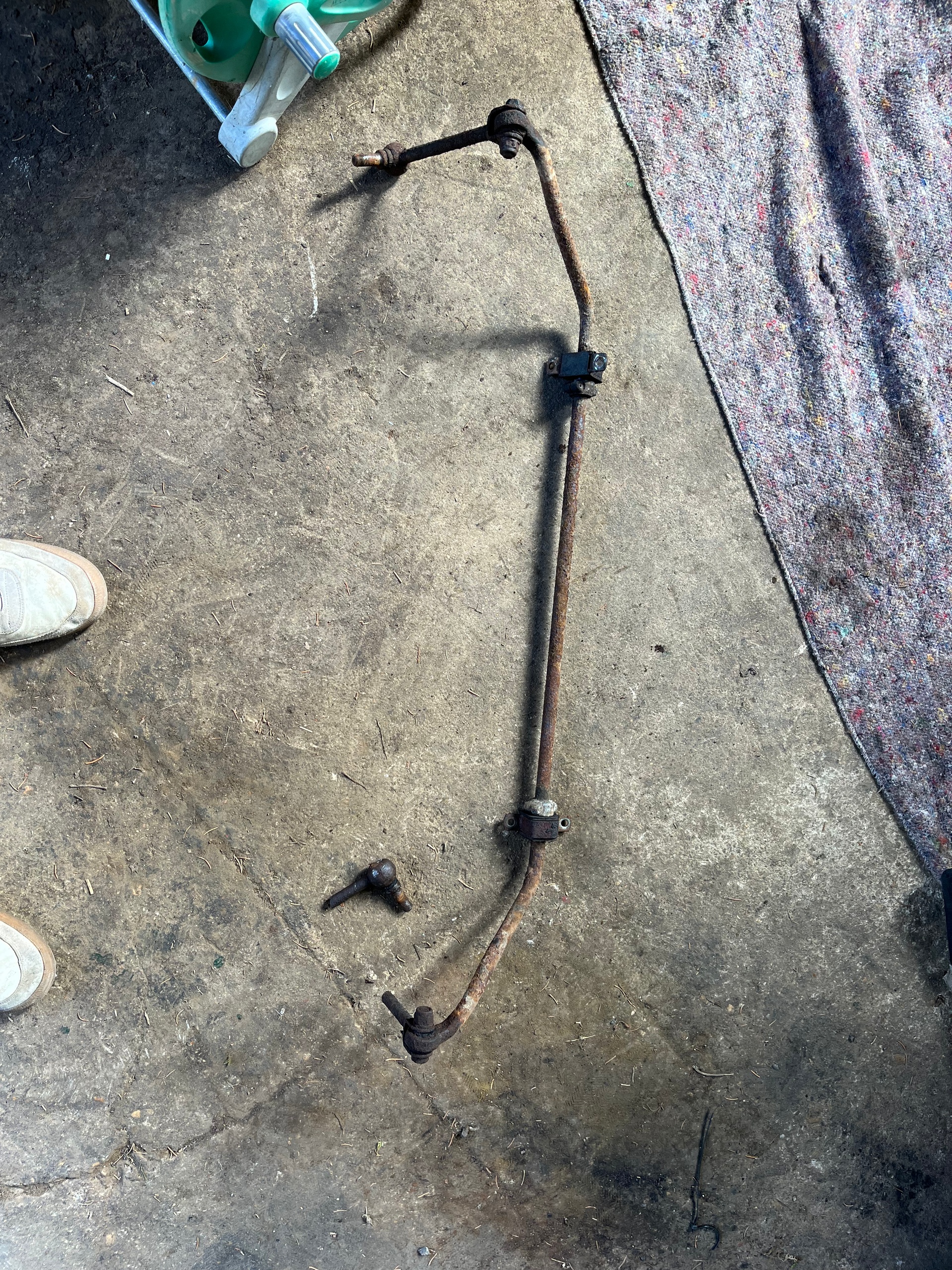
The old one came off relatively swiftly: the passenger-side simply undoing and coming away. The driver-side, however, took much more persuasion and eventually I just cut the old one off as the bolt was so rusted to the bottom of the suspension arm.

Old anti roll bar

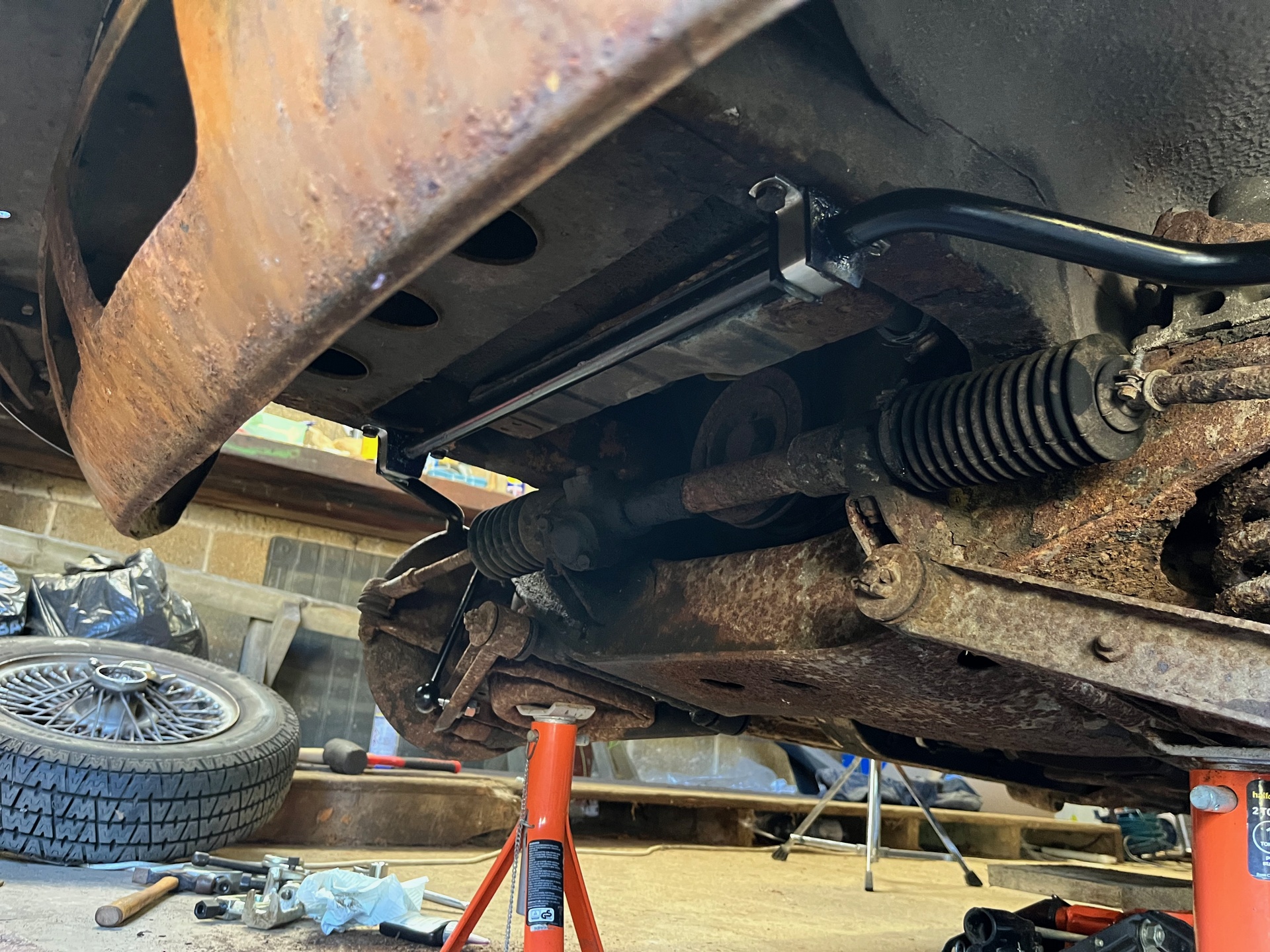
Installing the new one is a matter of routing the bar in the same location as the old. It bolts to the suspension on each side and then a polyurethane (or rubber, if you're feeling cheap) bushing is clamped on to the underside of the frame. Since the frame bracket bolts were greased, and slightly shorter than I would have liked, it took some work getting them in and tight, but it was achieved at the end.

New anti roll bar

I think the body roll has been reduced, but it's hard to really tell: it's never something I really noticed before! I do, however, feel safer - given the rust that the old one had - that it won't just snap if I go too hard around a sharp corner.

Good, easy project for a weekend.

New Fuse Box

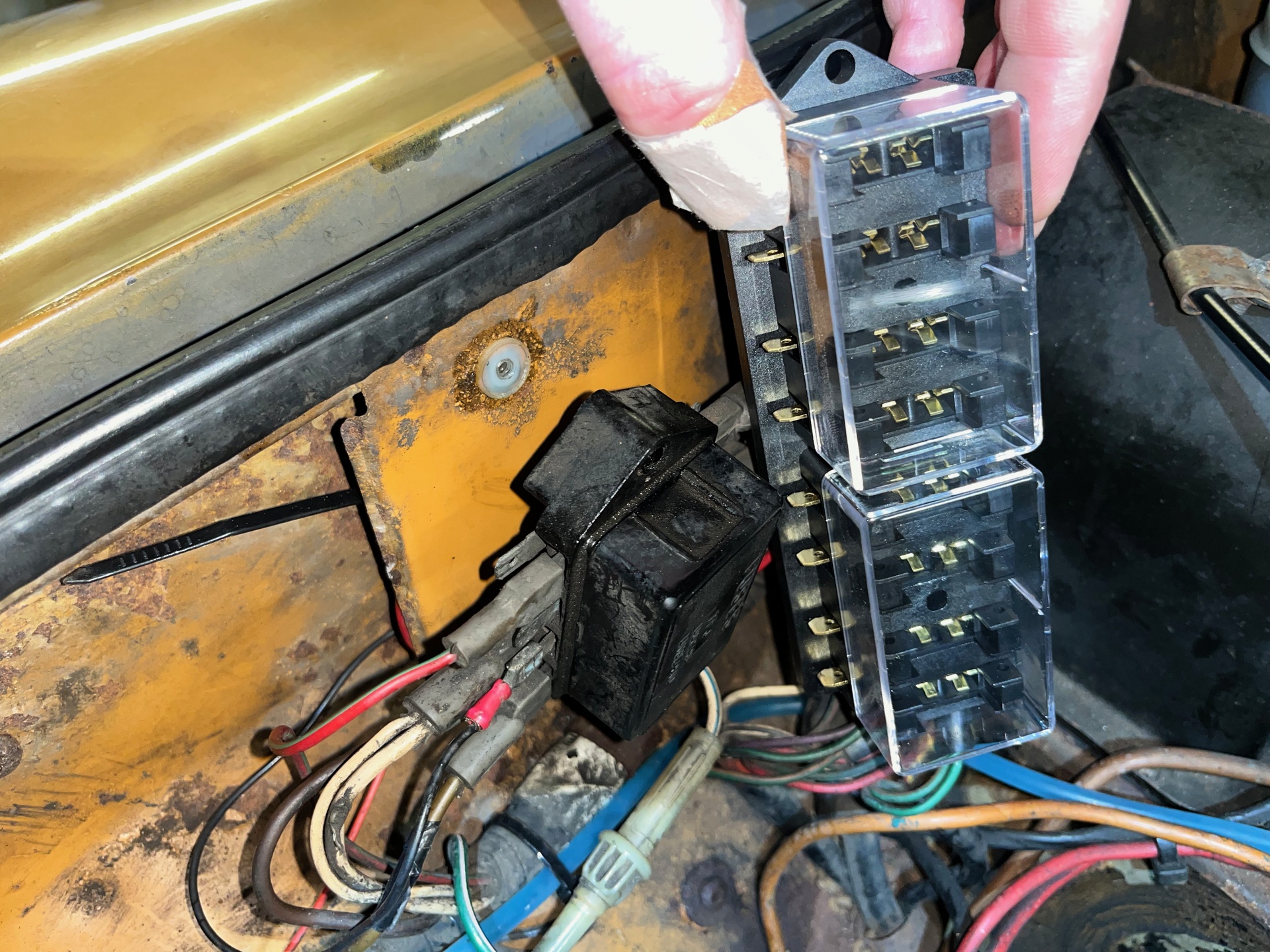
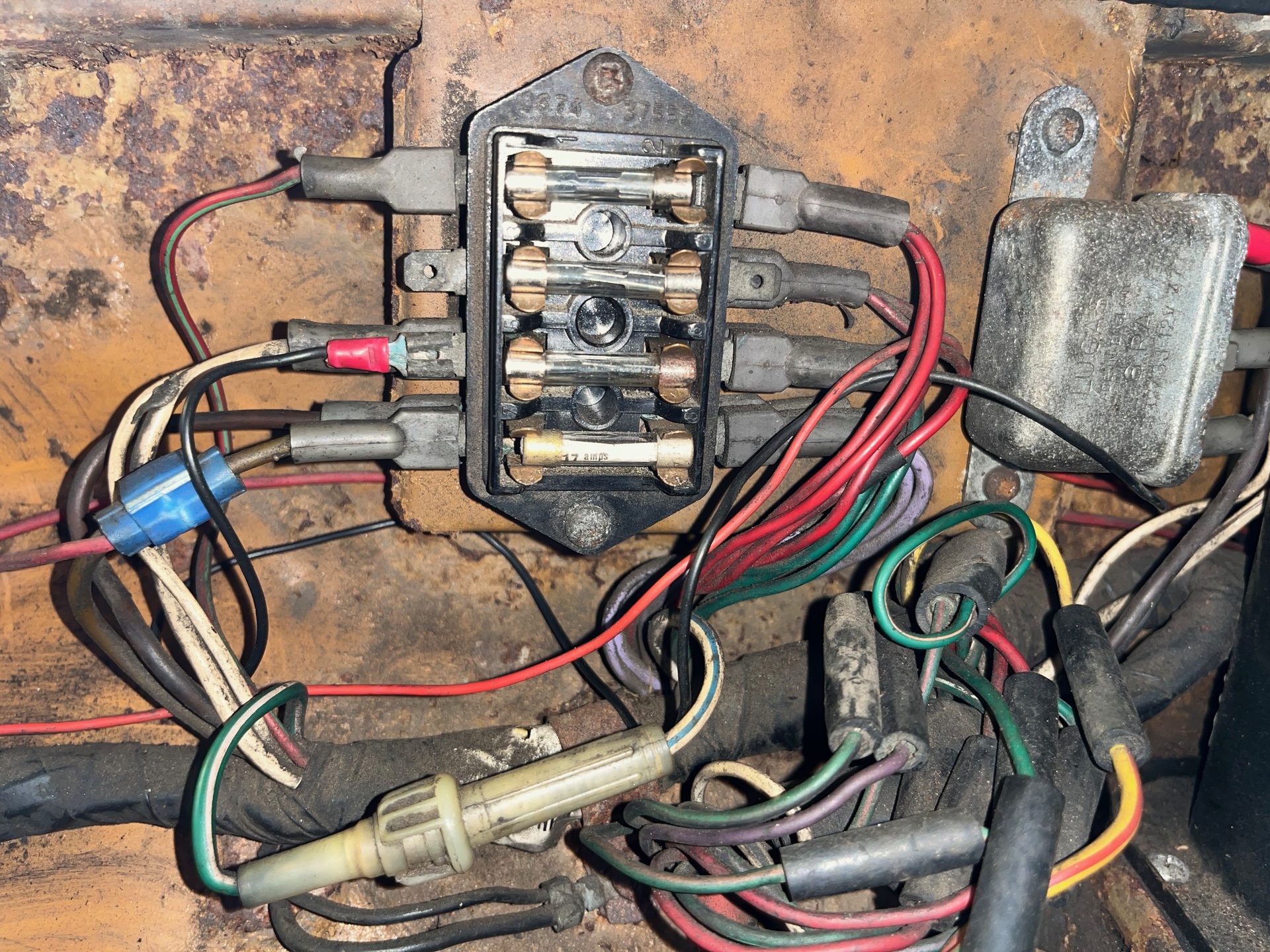
My first thought when looking for a new fuse box was to get one with more capacity for fuses. Just four fuses is a bit limiting and, clearly, MG themselves appear to have messed up here given they've had to add in an inline fuse in the same spot! Upgrading to more fuses seemed like an obvious win: more reliability from modern blade fuses and more space in case I decided I wanted to fuse more accessories (e.g. the headlights, permanent battery charging facility, etc.)

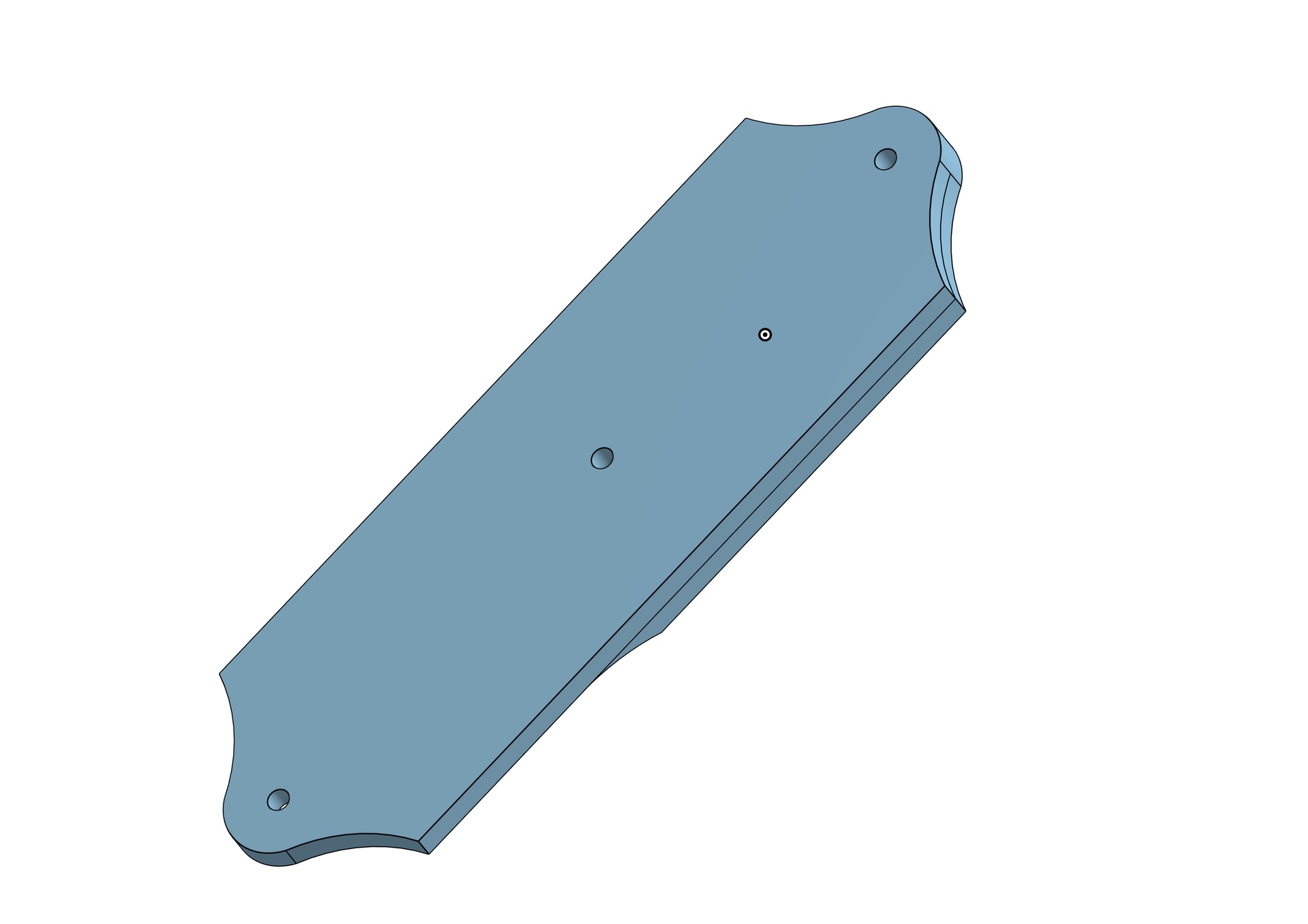
I bought a generic 8-slot blade fuse box from a large online retailer, and 3d printed a bracket for it which would allow me to attach it in place of the original without drilling extra holes. However, this was far too large, and the curve of the engine bay's bodywork made it impossible to fit in without some major redesigns. (Also, as I realised later, the PLA of the bracket was likely to melt, or at least seriously deform, given the under-bonnet temperatures). Plan A - scrapped.

Old and new fuse boxes Fuse box bracket render

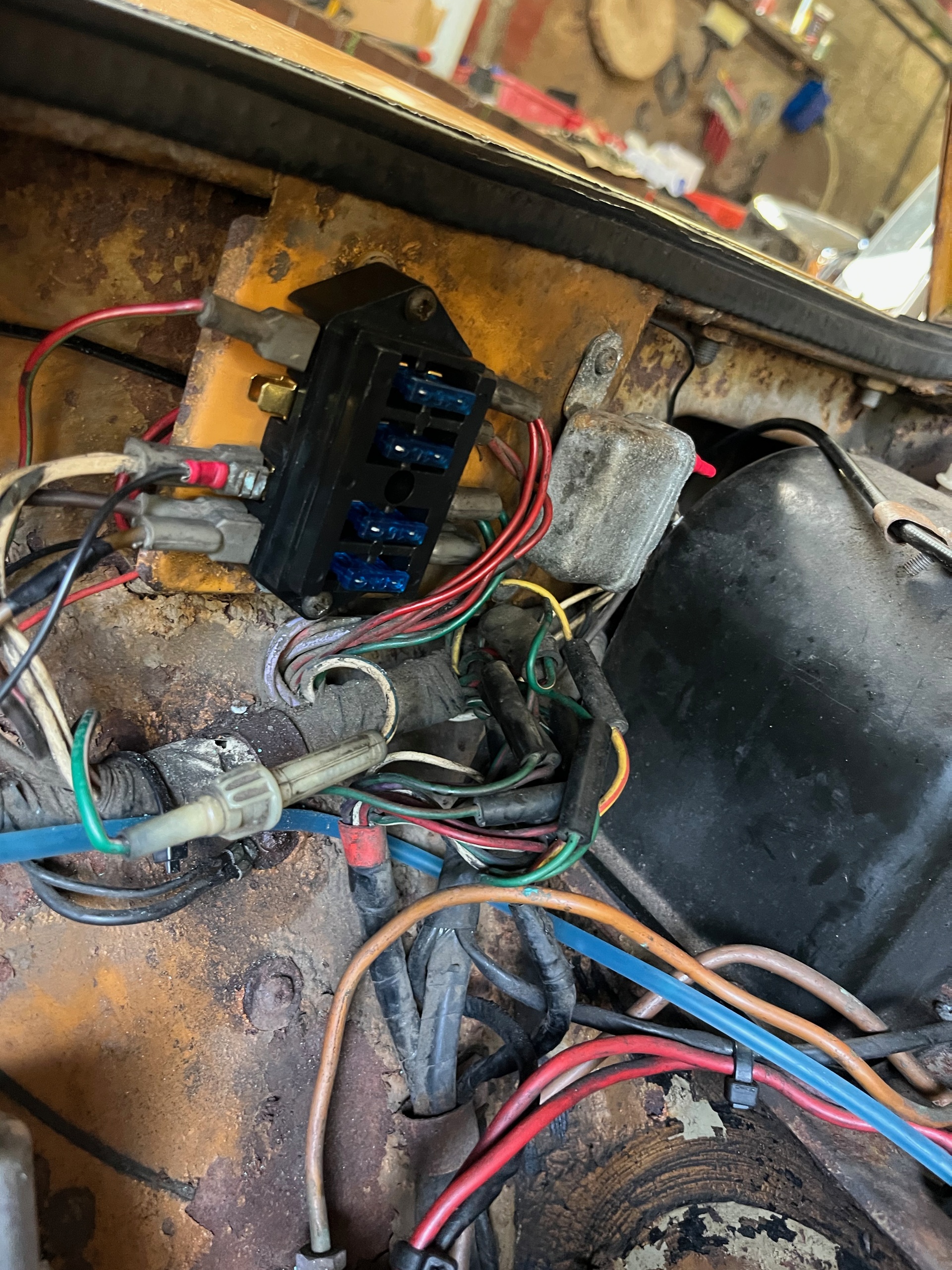
Luckily, however, I then found that a company in America was producing restomod fuse boxes that used blade fuses rather than glass! Sadly, I believe the company has decided to stop making them, but not before I bought one. It was a straight swap and install, took no time at all.

New fuse box

The new fuse box is likely more reliable (even if only because it's half a century younger...), and has fuses that are widely available. Given the corrosion that had built up on connectors of the fuse box, I imagine this will have actually very much helped the 50-year old wiring. A win-win all round!

Wire Wheels

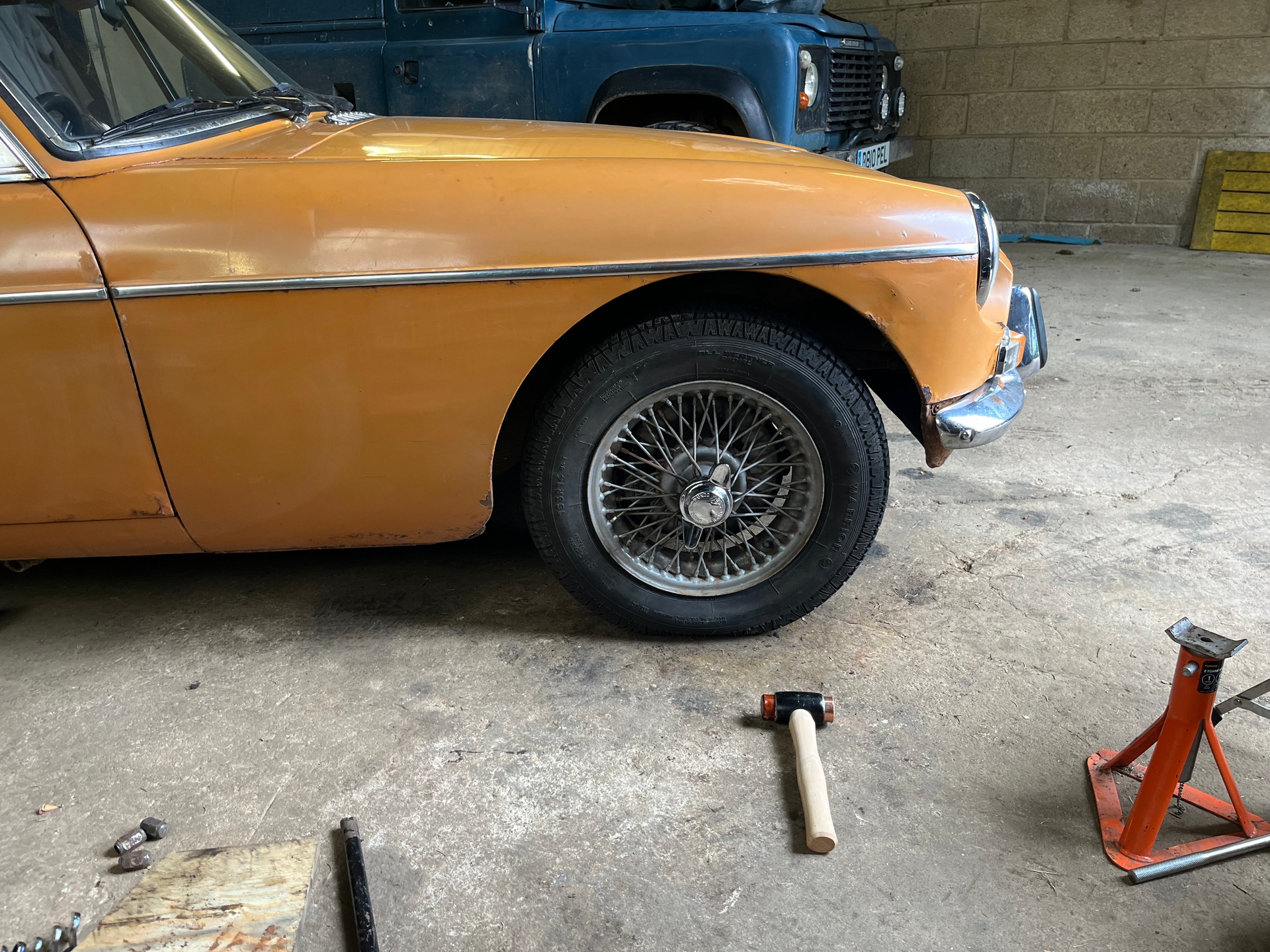
The old "rostyle" wheels have now been swapped out for more "classic" wire wheels. This was done using the MGBHive conversion kit.

Wire Wheels

The theory is to replace the wheel hubs, removing the four-stud pattern bolt ons with the splined-and-threaded shaft needed for wire wheels. The kit includes all you need to do this, including new bearing kits for the front.

Rear Wheels

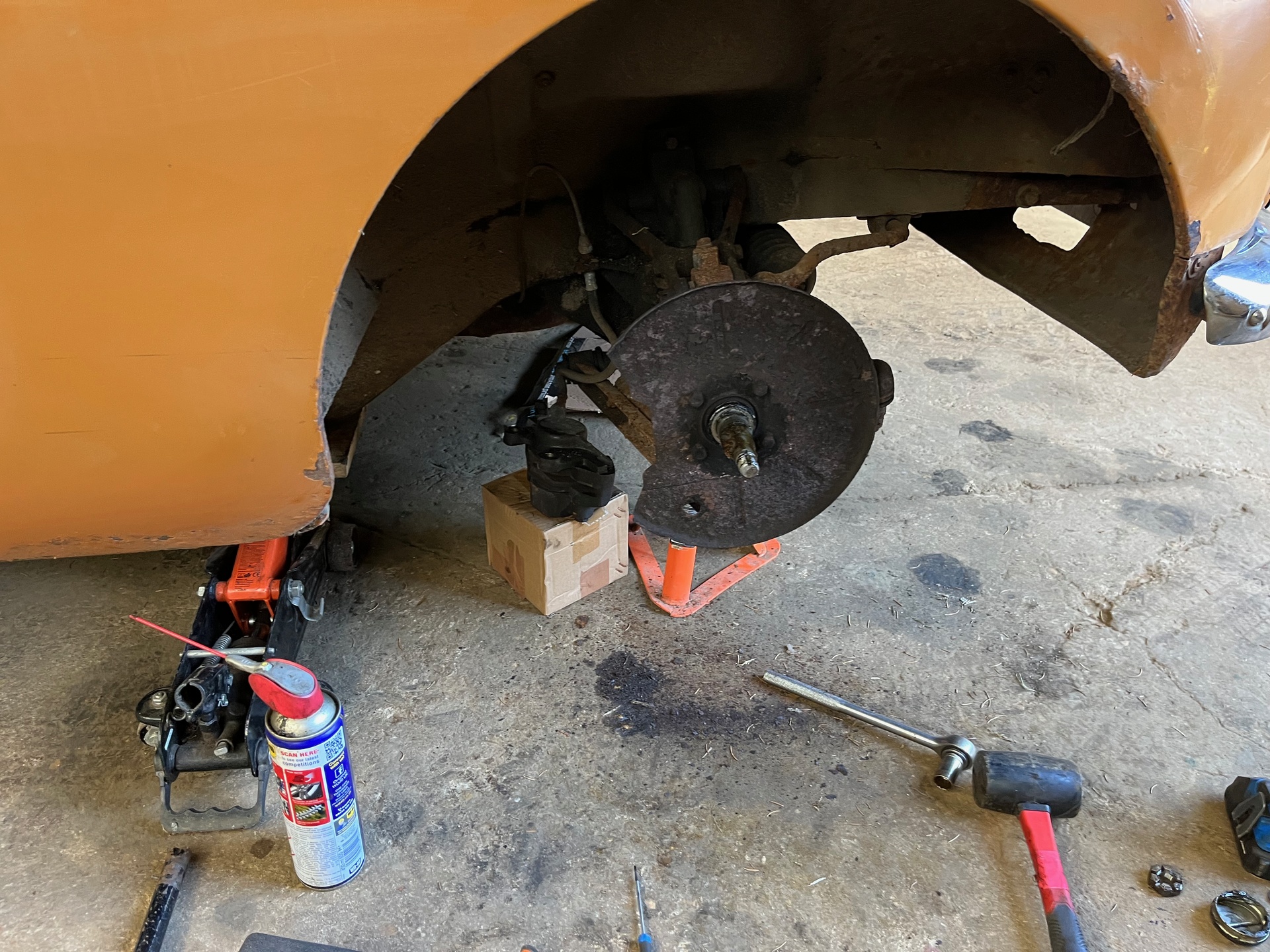
The rear wheels are the easier of the two sets to do, simply: 1. Jack up the car, release the handbrake (having chocked the car), and remove the wheel. 2. Remove the split pin in the castellated axle nut (using a 1-5/16th deep socket), the axle nut itself, and the split "collar" that sits behind it. 3. Remove the brake drum (2/3 can be done in either order) 4. Pull off the wheel hub from the splines it sits on - I used a bearing puller tool we already had, but the MGBHive instructions recommended reinstalling the brake drum backwards and using a mallet. 5. Slide on the new hubs - I used a small amount of copper grease on the splines. I was not sure if grease was a bad idea (given the proximity to the rear brakes), but I thought binding on would be bad. It's important to make sure you slide it on in a orientation that allows you to access the thru-holes for the split pins. Double check you can do this before continuing. 6. Attach the brake drum to the new hub, using the supplied four bolts - it helps to have an assistant depress the brake pedal for this, and the next bit. 7. Reinstall the collar and castellated nuts (instructions spec-ed 150lbft, but I just tightened it as far as I could), as well as the split pin. Bend up the split pin. 8. Grease the wheel splines and the threads. 9. Slide on wire wheel, and thread on spinner.

Simply repeat for the other side.

Wire Wheels

Front wheels

Important: Do not tackle without an ample supply of paper roll, degreaser, and gloves. You will be messing around with grease that may have been there since the factory, so watch out!

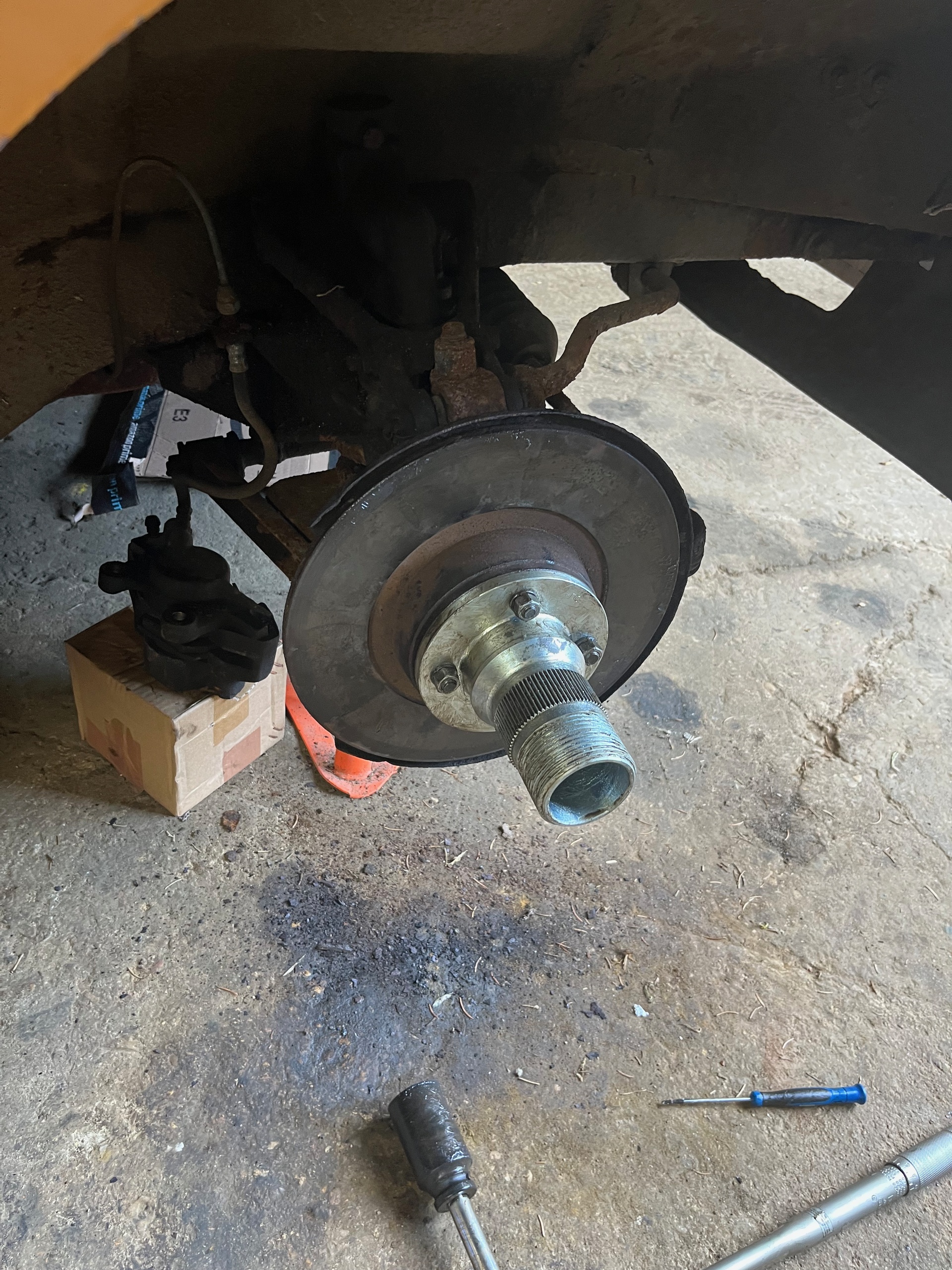
The supplied instructions are pretty accurate for this: 1. Chock, jack up, and remove wheel. 2. Remove the two rear bolts from the brake caliper, which attach it to the hub assembly. These are on the "back" of the assembly, are require some force to remove. I placed the lose caliper on a box at the back of the wheel-well, so that there was no force on the brake line. 3. Pry off the "cap" at the end of the axle. Use a large set of pliers/pipe wrench and a small flat-head screwdriver. 4. Remove the split pin from the castellated nut, and undo nut. Making sure to check for notched washer that might come off with the nut. KEEP BOTH SOMEWHERE SAFE. 5. Pull the hub and disc from the spindle. Use a sudden, firm action to bring as much of the internals off at the same time. 6. Remove the disc from the hub, retaining bolts, washers and nuts. 7. Pry apart the old hub. Being careful of the aged grease. Ignore both sets of bearings, and the rear oil seal. Make sure to get the spacer (which resembles a gear-lever knob), and the two shims that are stuck to its thin end (or the inner of the smaller bearing). Throw the rest of it away. 8. Don fresh gloves and insert the new bearing races into the new hub. I used a vice to press them into place. The larger on goes on the rear, and the smaller on the front. 9. Attach the disc to the new hub using the four nuts/washers/bolts you removed from the old hub. Tighten as much as you can. 10. Insert the spacer, and the inner, larger bearing (after packing with grease), as well as the rear oil seal. The side with the U channel goes facing towards the bearings. Pack the whole area with as much grease as you can. 11. Clean the spindle of all the old grease as you can mange. Making sure to re-install the "collar" which sits at the back of the splindle and spaces the hub/disc away from the rear shield. 12. Slot the hub assembly onto the spindle. Use firm, sudden movements. 13. Slide on the shims you removed from the old hub assembly, followed by the outer, smaller bearing (after packing with grease). 14. Follow with the notched washer, and the castellated nut. 15. Tighten the castellated nut to ~50lbft, then keep turning until a gap is free to insert the new split pin. 16. Insert and bend the new split pin, followed by the grease cap which just sits in the tube. 17. Grease splines and threads of hub, attach new wheel and do up spinner.

I found this video helpful in understanding the manner and order in which to insert bearings, even if he is doing it on a four-bolt hub.

Thoughts

With both wheels, I was unsure how much force is needed when doing-up the spinner on the wheel. I just hammered it home until I felt it was on properly, then gave it another one for luck. I believe they can be attached too tight, but better that then too lose!

Once you've done one wheel, the other side is a piece of cake.

Wire Wheels

These wire wheels seem smaller than the old ones, perhaps it is the tyre-size? I'll be getting new tyres anyhow so I will try and get the largest sidewall I can.

To fix: Wheel clamp is now too short. To fix, I will need to get a small section of threaded bar (3/8ths - 24) and a coupling bolt.

I need new tyres - what are the right sizes? 175/56R14? Can I use the tyres I removed from the old wheels - should I?

Things it would have been good to replace while I was there

  1. Front & rear wheel "shields" aka "dust covers"
  2. Rear wheel bearing (RH seemed a bit "weepy")

New Starter Motor

MGOC Spares had a discount on new, hi-torque starters. So I bought one.

The new units were much smaller and lighter than the old. They also promise better performance, lower amp draw, and more reliability. This tackled two previous issues I'd experienced with the starter: 1. I had had the starter "stick" onto the starting gear. This made it inoperable and left me stranded on the side of the road in a busy Cornish town. It turns out that this is an easy fix, once you know the trick: simply turn over the engine by hand to unstick the starter and allow it to reset. Took the AA man less than two seconds! 2. When the car is hot, it sometimes takes a while to start. A newer, better cranking start should both shorten that time and - given it requires less power - give the car more juice.

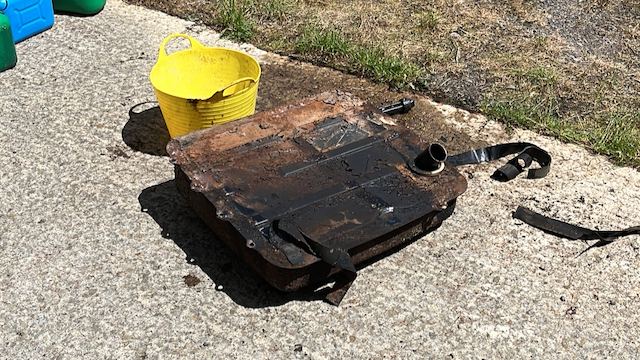
I sadly didn't seem to take many photos, but the removal/install is easy: 1. Remove the bolts and unplug the wires. 2. Remove starter 3. Installation is reverse of removal.

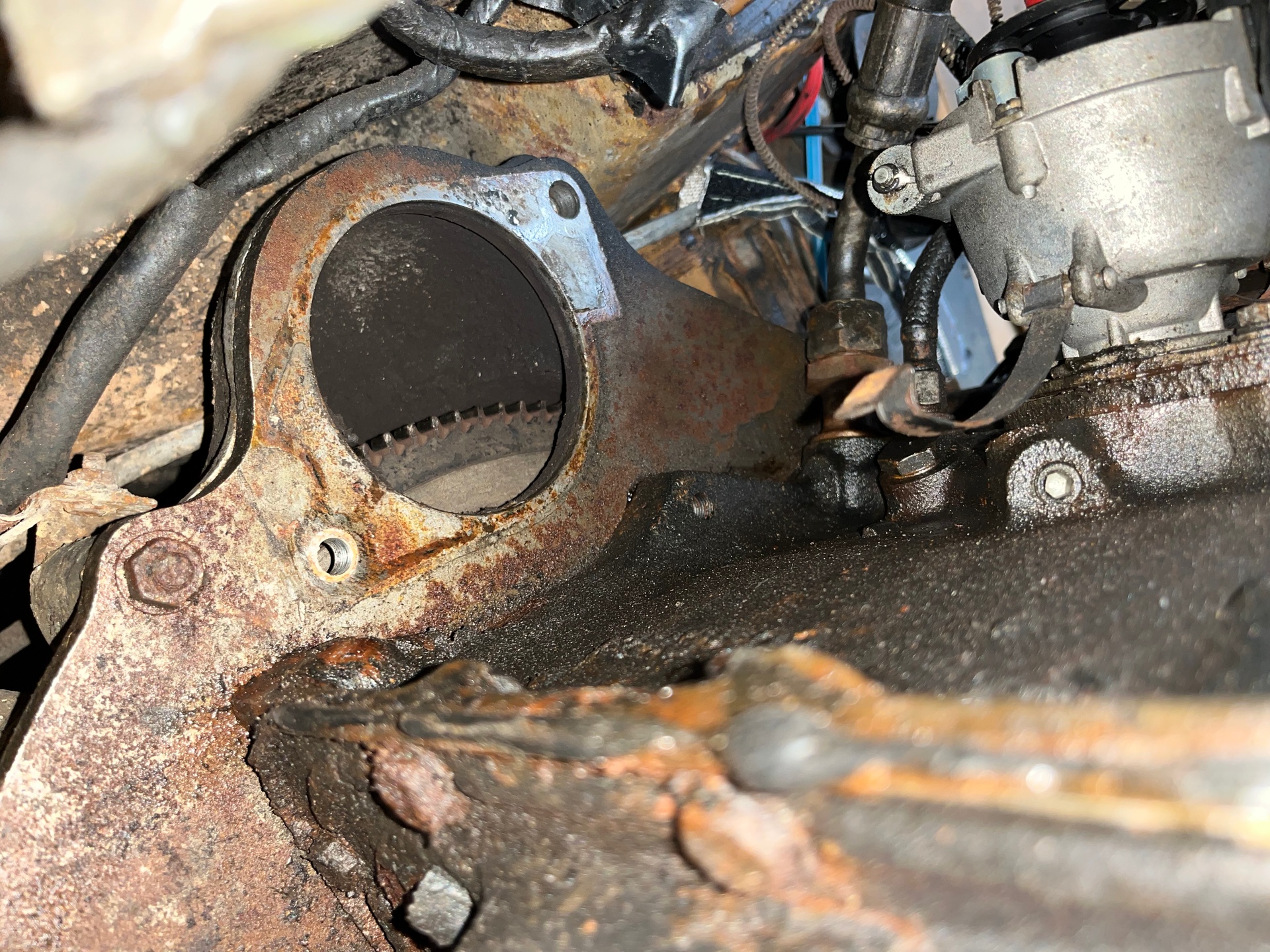
This process did allow me a good look at the ring-gear teeth which - to my untrained eye - look fine-ish.

Starter-less engine

The new starter appears to have solved the above issues: it sounds to be cranking faster (though, this might just be a different noise of the starter?), and I've yet to have the hot starting issues - whoopee!

Fuse Box Thoughts

Recently, during a drive, we had an electrical fault. The switch I use to a security relay for the starter motor blew, meaning the starter would not turn over. This problem, once found, was easily solved by bridging the contacts of the switch with a screwdriver, allowing the starter to turn the engine, and engine to turn on.

Having replaced the switch, I began to think about other possible issues we might encounter. The fuse box, despite never having been the cause of an issue in all the time I've owned it, seemed a likely point of failure. The four glass fuses that the car uses to ensure nothing fries have long been overtaken by modern blade fuses meaning they're unlikely to be purchasable from a service station in the result of a blow.

This leaves me with four options: 1. Replace the fuse box with a modern upgrade with blade fuses 2. Somehow convert the glass fuses to blade fuses 3. Just make sure to carry spare fuses

The first one, mostly due to a desire to overhaul that particularly messy, dirty section of the car seemed to be the best choice.

Wire Wheels

Sunroof Leaking Issues 1

Date: 21/4/2019

Sadly the Tudor Webasto Sunroof has begun to leak rather badly on the rear right hand side. When it rains heavily, water leaks through the edge of the sunroof and into the car. And it has begun to stain the carpet and headliner. 

There is very little information on removal of Tudor Webasto Sunroofs online - there is not very much information of them at all! - but have found this blog post: http://www.theminiforum.co.uk/forums/topic/276315-tudor-webasto-removal-guide/ which I will attempt to follow.

I plan to remove enough of the sunroof that I can see the back of it, where the leak is, and then once I have worked out the issue I will be able to fix it. I imagine that the issue is caused by a gap between the sunroof frame and the bodywork which allows the water in, if that is the cause of the leak then I will be able to calk it very easily. If it something more difficult then I will require more thinking!